

An automatic fire detection and alarm system (SADI) has one job: to notice a fire early and warn the people inside and, where required, the fire brigade as well. To do this it brings together parts that communicate with each other.
- Automatic detectors: sense smoke or heat.
- Manual call points: allow anyone to raise the alarm by hand.
- Control panel: receives the signals, shows where the alarm came from and controls everything else.
- Sounders and beacons: warn people.
- Emergency power supply: keeps everything working if the electricity fails.
- Communicator: sends the alert to the fire brigade, when the system requires it.
The three system levels
The regulation defines three alarm configurations, which depend on the type of space and the risk category. The higher the risk, the more complete the system.
Swipe to see the full diagram →
Alarm buttons, detectors and an emergency supply. Suits small low-risk premises such as shops, offices, cafés and restaurants in category 1.
Adds a panel with timings and controls, giving staff time to check the alarm and trigger safety equipment.
Covers the whole building, alerts the fire service automatically and sounds the alarm outdoors too. This is the rule from category 2 onwards in most uses.
Conventional or addressable?
| Conventional | Addressable | |
|---|---|---|
| How it identifies the location | By zone, a group of detectors | Each detector has its own address: the panel tells you which one triggered |
| Suited to | Small and medium-sized premises | Larger buildings, hotels and shops with many rooms |
| Maintenance | Tested zone by zone | Detailed diagnostics for each detector |
| Expansion | More limited | Easier to add devices |
Each detector in the right place
There are optical smoke detectors, heat detectors and multi-criteria detectors. In a kitchen or in a space with steam or dust, an ordinary smoke detector triggers by mistake; there, a heat detector or another solution is used. Choosing the right detector for each location is the best way to avoid false alarms.
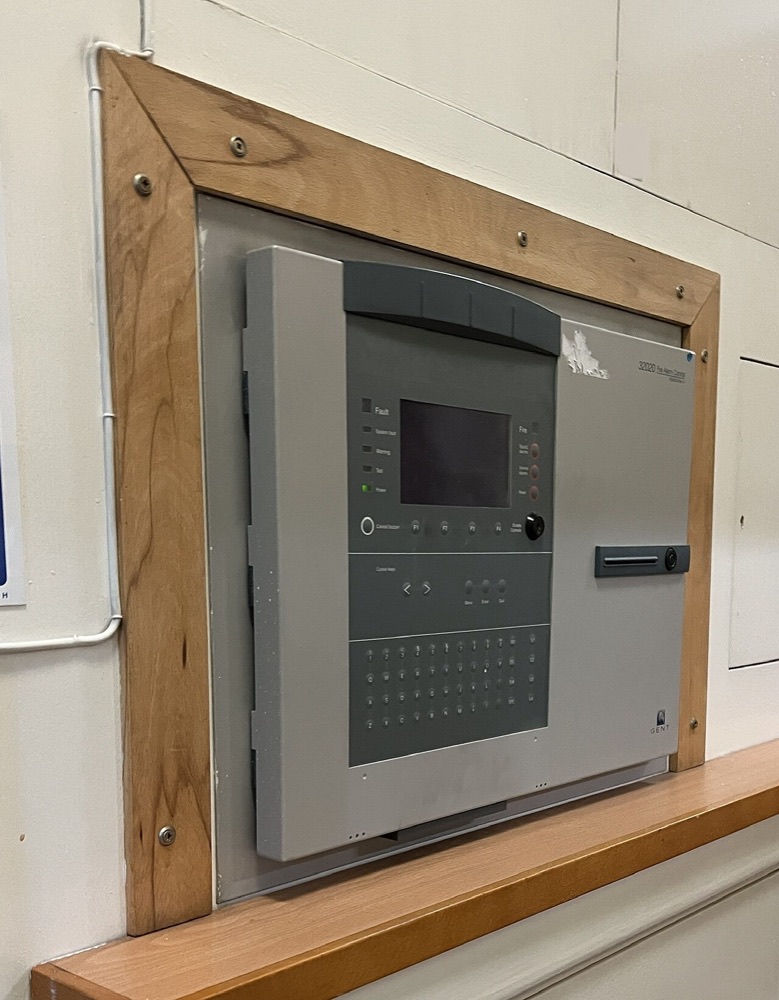
Photo: Luke W. / Wikimedia Commons / CC0 · Source
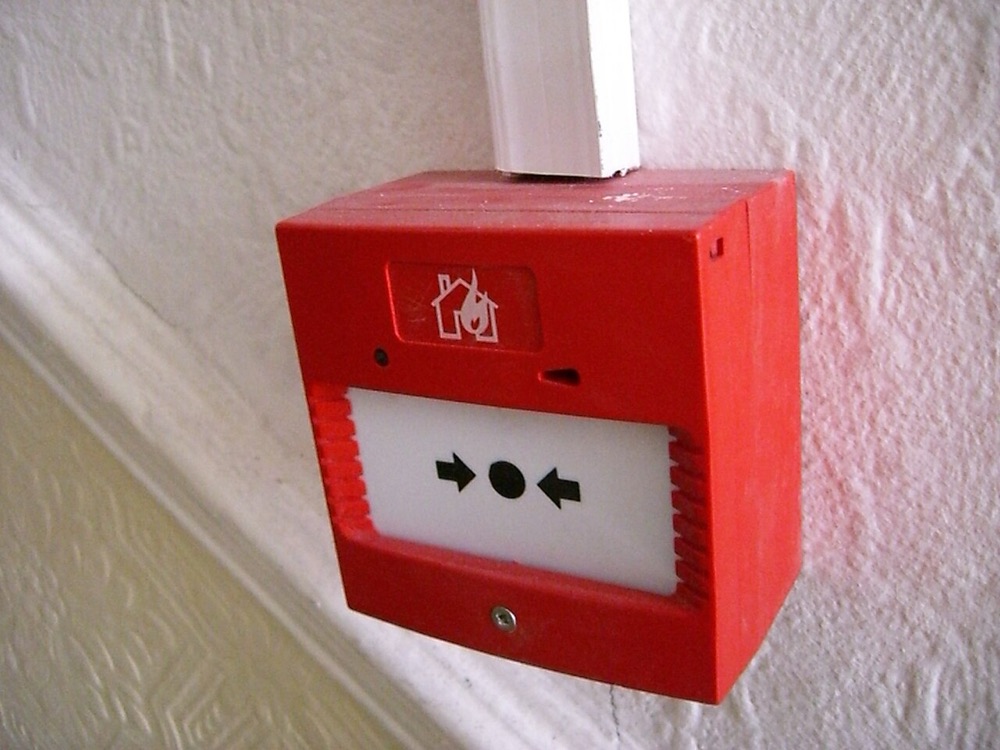
Photo: Edward Betts / Wikimedia Commons / public domain · Source
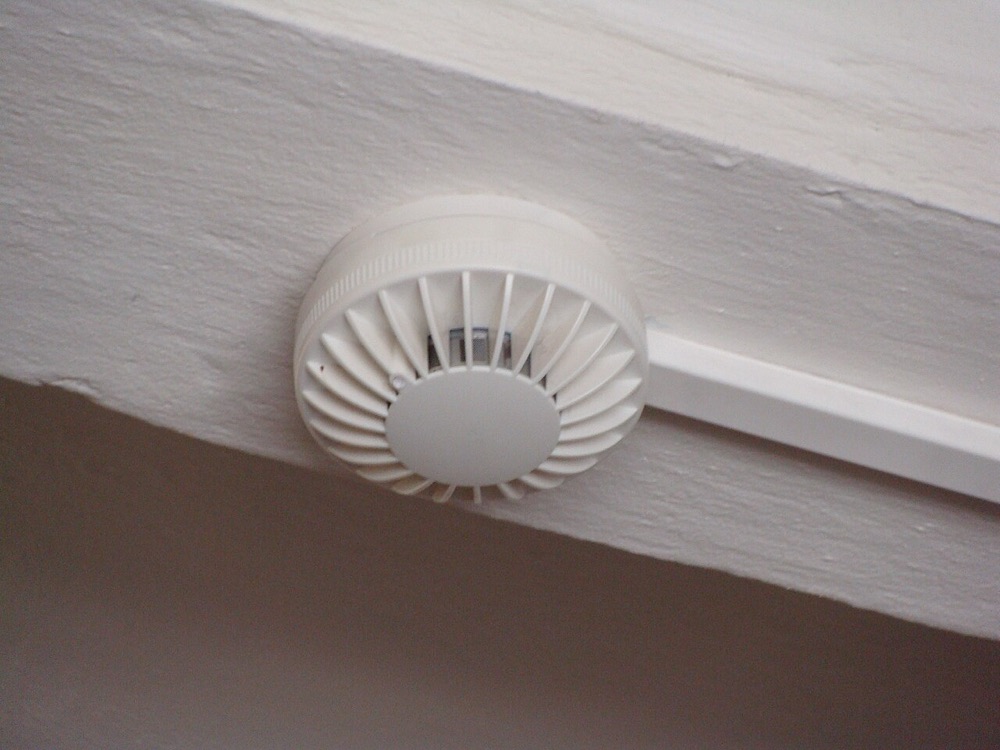
Photo: Georg Pik / Wikimedia Commons / CC0 · Source
Maintenance
An alarm that is not tested may not work when it is needed. The equipment must be checked regularly by a company registered with the SRPCBA (Azores Regional Fire and Civil Protection Service), and each intervention is entered in the building's safety records.
Can I have detectors only, without a control panel?
It depends on the type of space and the risk category. Configuration 1 is the simplest, but it always includes call points, detectors and an emergency power supply.
Does the system call the fire brigade automatically?
Only in configuration 3 (automatic alert). In the others, the alert is raised by people, by telephone, once the alarm has been confirmed.